

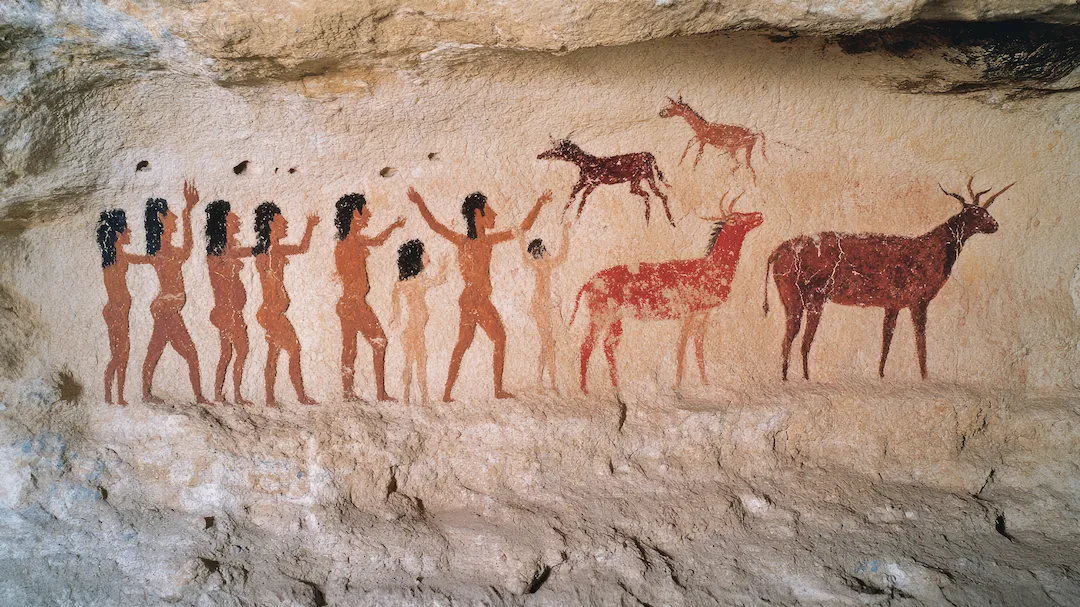
Malaga hides much more than beaches and white villages. Beneath its mountains and inside its caves lies a thousand-year-old heritage that rarely appears in the most common tourist guides: cave art. The province has several archaeological sites where it is still possible to admire prehistoric engravings and paintings, many of which are recognised by UNESCO as World Heritage Sites.
In this article, we suggest a route by car to discover the main rock art sites in Málaga, combining history, landscape and the freedom to move at your own pace through some of the most authentic areas of the interior.
La Cueva de la Pileta (Benaoján)
Located in the Serranía de Ronda, the Cueva de la Pileta is one of the most important Palaeolithic art sites on the peninsula. Discovered in 1905 by a local farmer, it houses cave paintings that are over 20,000 years old: figures of horses, deer, fish and abstract symbols in red and black tones.
The visit is guided, with torches in hand, and allows you to delve into an almost untouched environment. It takes about 30 minutes to get there by car from Ronda, along narrow, charming roads. The cave’s surroundings, nestled among limestone mountains, are ideal for rounding off the day with a hike or a meal in the nearby village of Benaoján.
El abrigo de la Cueva del Tesoro (Rincón de la Victoria)
The Cueva del Tesoro (Treasure Cave) in Rincón de la Victoria is the only sea cave in Europe that can be visited and one of the few with rock art remains on the coast. Although its interior has been profoundly altered by modern excavations, it still preserves some symbols and schematic engravings from the Neolithic period.
It can be visited all year round and is easily accessible by car from Malaga city (about 15 minutes). It is equipped with walkways and artificial lighting, making it suitable for all types of visitors. On leaving, you can enjoy the nearby beaches or stroll along the promenade at La Cala del Moral.
Los abrigos de La Araña y Peñón del Cuervo (Málaga Este)
In the eastern part of the city of Malaga, very close to the sea, there is a lesser-known but highly valuable archaeological site: the La Araña ruins. Remains of human settlements dating back more than 30,000 years have been documented there, as well as shelters with engravings and cave art, especially in Peñón del Cuervo and its surroundings.
The visit is not strictly speaking a tourist attraction, but the site is freely accessible and can be explored on foot from the road. We recommend combining it with a stop at the Cerro de la Tortuga archaeological sites, also in the eastern part of the island, to round off an archaeological day by the sea.
El Torcal de Antequera: prehistoric art and unique landscape
Although it is best known for its geological formations, Torcal de Antequera also houses remains of cave art in some of its natural shelters. In protected areas of the park, such as Cueva del Toro, Neolithic engravings and paintings of great interest have been found.
Visits to these shelters are restricted, but you can see explanatory panels at the Torcal visitor centre. Even so, driving through this area is an experience in itself: winding roads between rocks, spectacular views and the chance to combine your visit with the Menga Dolmen, another UNESCO World Heritage Site.
Rock art beyond the province: extra suggestion
If you’re willing to drive a little further, very close to the borders of Málaga you can find gems such as the Nerja Cave (Granada), with remains of Palaeolithic art, or the Las Chorreras rock art site in Archidona, on the border between Málaga and Córdoba. Some require prior booking, but all are accessible by car and can be part of a weekend archaeological getaway.
Conclusion
Discovering Malaga’s cave art is like travelling back to the distant past, when the first inhabitants of the peninsula decorated cave walls with scenes from their daily lives, beliefs, or abstract symbols. Today, these places are authentic treasures that remain untouched by mass tourism, accessible only to those willing to explore at a leisurely pace.
Doing it by car allows you to connect the enclaves at your own pace, stop at viewpoints, villages or intermediate trails, and enjoy a complete and personal cultural experience. If you are passionate about history or looking for a different route through the Malaga countryside, this is an option that will not disappoint.