

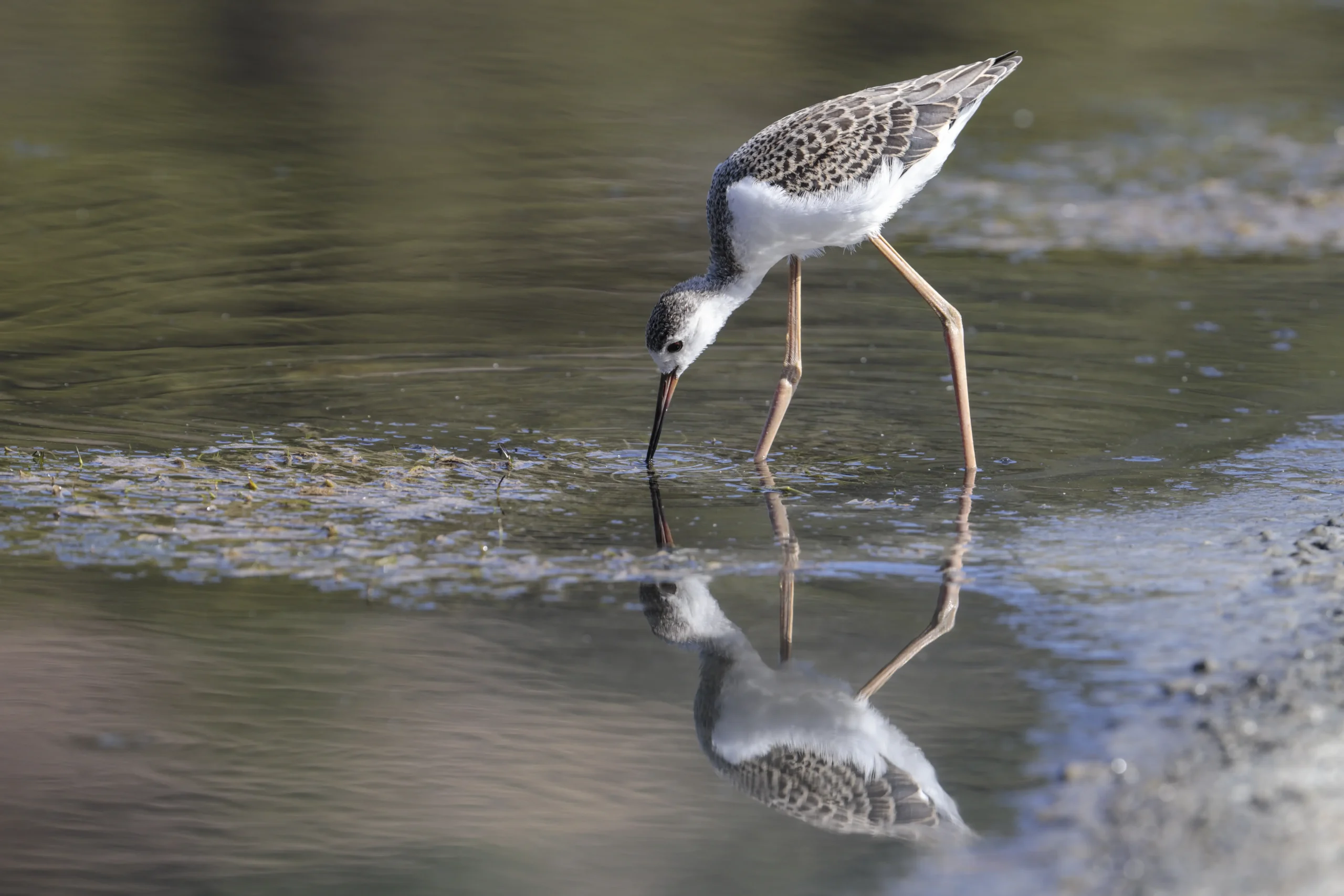
Malaga is much more than beaches, charming whitewashed villages and sunny weather. Its extraordinary variety of landscapes makes the province an ideal destination for nature lovers, particularly those who enjoy birdwatching. In fact, more than 300 bird species can be observed across its natural areas throughout the year.
From the flamingos of Fuente de Piedra to the griffon vultures of the Serranía de Ronda, not to mention the seabirds found along the Costa del Sol, there are numerous places to enjoy birdwatching in Malaga.
The province’s proximity to the Strait of Gibraltar, one of the main migratory routes between Europe and Africa, creates excellent opportunities to observe different species depending on the season.
Although spring and autumn are especially interesting because of bird migration, Malaga offers birdwatching opportunities all year round. All you really need is a pair of binoculars, a little patience and some knowledge of where to look.
If you’re visiting on holiday and want to explore several nature reserves or discover less accessible parts of the province, one of the most convenient options is to hire a car in Malaga.
Having your own vehicle allows you to travel between wetlands, viewpoints and mountain areas at your own pace, plan excursions around the best birdwatching hours and discover places that aren’t always easily accessible by public transport.
When Is the Best Time for Birdwatching in Malaga?
One of Malaga’s greatest advantages for birdwatching enthusiasts is that every season offers different opportunities.
Some birds remain in the province throughout the year, others arrive during the warmer months to breed, and many use its wetlands and mountain ranges as resting places during their annual migrations.
Spring: Migration, Breeding Birds and Flamingos
Between March and May, Malaga experiences one of its most interesting periods for birdwatching.
Numerous species return from Africa to their European breeding grounds, while others settle in Malaga’s natural areas to nest.
This is an excellent time to see European bee-eaters, swallows, swifts, booted eagles and various waterbirds.
Spring is also usually the best season to visit Fuente de Piedra Lagoon and observe its famous flamingos, particularly when winter and spring rainfall has provided favourable water levels.
Summer: Seasonal Visitors and Mountain Raptors
During June, July and August, Malaga’s mountains and woodlands offer excellent opportunities to observe resident and summer-visiting species.
Early mornings are particularly recommended, both because birds are often more active and because temperatures are considerably more comfortable.
During this season, you may encounter swifts, bee-eaters, shrikes, short-toed snake eagles and various woodland birds.
From late July and throughout August, the southward migration of certain species also begins, including black kites and other birds of prey.
Autumn: The Spectacle of Migrating Birds
Between September and November, numerous bird species pass through southern Spain on their way to Africa.
The mountain ranges close to the coast become excellent observation points, especially between August and October, when booted eagles, European honey-buzzards and black kites can be seen taking advantage of rising air currents.
Autumn is also an interesting time to explore wetlands, where different waders and waterbirds stop to rest during their long journeys.
Along the coast, October and part of November offer opportunities to watch the passage of shearwaters, northern gannets, skuas and other seabirds.
Winter: Waterbirds and Visitors from Northern Europe
Winter is also a rewarding season for birdwatching in Malaga.
The province’s relatively mild temperatures attract numerous species from colder parts of Europe, particularly to lagoons, marshes and agricultural areas.
During these months, you may spot common cranes, ducks, teals, grebes, thrushes and European robins, among many other species.
Along the coastline, cormorants, wintering gulls and northern gannets are particularly interesting. Gannets can sometimes be seen making spectacular dives into the sea when feeding on shoals of fish.
Best Places for Birdwatching in Malaga
Malaga province is home to wetlands, river estuaries, mountain ranges and coastal cliffs, each offering very different habitats.
These are some of the most interesting locations for both beginner birdwatchers and experienced enthusiasts.
1. Fuente de Piedra Lagoon: A Paradise for Flamingos
Fuente de Piedra Lagoon, located in the north-west of Malaga province, is one of the most iconic birdwatching destinations in Andalusia.
Covering approximately 1,400 hectares, it is the largest inland wetland in Andalusia and home to one of Europe’s most important breeding colonies of greater flamingos.
Spring, especially between March and May, is usually the best time to observe large concentrations of flamingos.
However, the lagoon is also interesting in winter, when common cranes can be found in nearby fields, alongside ducks, teals and other waterbirds.
To make the most of your visit, head to the José Antonio Valverde Visitor Centre and explore signposted trails such as El Laguneto and Las Albinas.
The nature reserve has several bird hides and viewing areas where visitors can observe wildlife without disturbing it.
It’s important to remember that this is a seasonal lagoon, so water levels and the number of flamingos present can vary significantly from one year to another.
2. Guadalhorce River Estuary: Birdwatching Close to Malaga City
If you’re looking for somewhere to begin birdwatching without travelling far from the city, the Guadalhorce River Mouth Natural Area is one of the best options.
Located on the coast between Malaga city and Torremolinos, this protected area contains several freshwater and brackish lagoons that provide shelter and resting places for numerous migratory birds.
Among the most interesting species are the white-headed duck, greater flamingo, Eurasian spoonbill, common kingfisher, osprey and various herons, terns and waders.
Spring and autumn offer particularly impressive diversity, although waterbirds can be observed throughout the year.
The reserve has walking trails and bird hides that make identifying species easier, so it’s a recommended destination for both beginners and experienced birdwatchers.
3. Campillos Lagoons: Ducks, Cranes and Other Waterbirds
In the inland part of Malaga province, near Antequera, you’ll find the Lagunas de Campillos Nature Reserve, a collection of seasonal wetlands surrounded by farmland.
Laguna Dulce, Laguna Salada, Laguna de Camuñas, Laguna de Capacete and other small lagoons in the area provide a refuge for ducks, coots, black-winged stilts, grebes and numerous other waterbirds.
The area is also particularly interesting during the wintering season for common cranes.
Winter and spring generally offer the best viewing conditions, provided the lagoons contain sufficient water.
During summer, some may dry out completely, significantly changing the number and variety of birds present.
Laguna Dulce and Laguna Redonda have viewing points where visitors can observe the landscape and wildlife.
You can also combine a visit to Campillos with Fuente de Piedra if you’d like to spend a full day exploring Malaga’s inland wetlands.
4. Vélez River Estuary: Migratory Birds in the Axarquia
Between Torre del Mar and Almayate lies the mouth of the Vélez River, one of the most interesting places for birdwatching in the Axarquia region.
Despite its relatively small size, this area contains a variety of habitats that attract herons, cormorants, flamingos, ducks and small migratory birds.
It is particularly important for wading birds, which take advantage of the wetland environment during their long-distance journeys.
Spring and autumn are the most recommended seasons, although wintering species and resident birds can also be found here.
The area has a birdwatching observation point and makes an excellent excursion combining nature with coastal scenery.
5. Calaburras Lighthouse: Seabird Watching in Mijas Costa
In Mijas Costa, close to Fuengirola, Punta de Calaburras is one of the most important coastal sites in Malaga for observing seabirds.
Its geographical position and rocky shoreline make it an excellent viewpoint during migration periods and the winter months.
From the Punta de Calaburras birdwatching site, visitors may see Balearic and Cory’s shearwaters, northern gannets, gulls, terns and different species of skuas, depending on the time of year.
During winter, ruddy turnstones, sandpipers and other birds searching for food among the rocks may also be present.
It’s a particularly convenient destination for visitors staying in La Cala de Mijas, Calahonda or Fuengirola who want to enjoy birdwatching without travelling inland.
Mijas is also home to Mirador de las Águilas (Eagles Viewpoint), in Sierra Alpujata, which is used for observing migratory birds of prey travelling towards the Strait of Gibraltar.
6. Artola Dunes and the Río Verde Estuary: Nature in Marbella
Marbella also has several interesting birdwatching locations beyond its beaches and promenades.
One of them is the Artola Dunes Natural Monument, in Cabopino, where sand dunes, pine woodland and Mediterranean vegetation have been preserved.
This environment is home to birds associated with the coastline and scrubland, while different seabird species can be observed from the beach.
During migration periods, Marbella’s coast is especially interesting for watching birds travelling along the Mediterranean corridor.
Another recommended location is the mouth of the Río Verde, where you may encounter little egrets, grey herons, kingfishers, gulls and other waterbirds, depending on the season and river conditions.
Both sites offer an opportunity to combine birdwatching with a relaxing walk through some of the best-preserved natural areas along Marbella’s coastline.
7. Refugio de Juanar: Woodland Birds Near Marbella
For those who prefer mountain scenery, Refugio de Juanar, in the municipality of Ojén and just a short distance from Marbella, is an excellent choice.
Its surroundings of pine trees, holm oaks and Mediterranean vegetation support a varied selection of woodland birds, including great spotted woodpeckers, Eurasian nuthatches, short-toed treecreepers, Eurasian jays and several species of tits and finches.
Birds of prey such as sparrowhawks, booted eagles and short-toed snake eagles may also be observed.
During autumn and winter, additional species arrive, including thrushes and, under suitable conditions, ring ouzels.
Several walking trails allow visitors to explore different habitats, making Juanar a great option for combining hiking and birdwatching during much of the year.
8. Montes de Malaga: Woodland Birds and Birds of Prey
The Montes de Malaga Natural Park is located a short distance from the city and offers an entirely different experience from the coastal wetlands.
Its pine forests and Mediterranean woodland provide a home for numerous woodland species, including great tits, blue tits, Eurasian jays, short-toed treecreepers and great spotted woodpeckers.
Birds of prey such as northern goshawks, Eurasian sparrowhawks, booted eagles and short-toed snake eagles may also be seen, depending on the season.
Spring is particularly interesting because of breeding activity and birdsong.
However, the park can be visited throughout the year, and the cooler months often provide more comfortable conditions for exploring its trails.
9. Desfiladero de los Gaitanes: Vultures and Eagles at El Chorro
The Desfiladero de los Gaitanes Natural Area, famous for the Caminito del Rey walking route, is also one of Malaga’s most important refuges for birds of prey.
Its spectacular rocky cliffs provide nesting and resting places for griffon vultures, golden eagles, Bonelli’s eagles and peregrine falcons.
Watching these magnificent birds soar above the gorge is one of the most memorable experiences for any birdwatching enthusiast.
The area is interesting throughout the year, although bird activity and weather conditions change with the seasons.
There are several viewing points around El Chorro and the nearby reservoirs, so you don’t have to walk the Caminito del Rey itself to enjoy birdwatching.
Before setting off, check the condition of the trails and any access restrictions, particularly in protected areas or following adverse weather.
10. El Torcal de Antequera: Birds Among Extraordinary Rock Formations
El Torcal de Antequera is famous for its striking limestone formations, but it is also an excellent location for watching mountain birds and species associated with rocky cliffs.
Among its most interesting birds are red-billed choughs, griffon vultures, peregrine falcons, blue rock thrushes and various smaller species adapted to open, rocky landscapes.
Spring, particularly May, is one of the best times to visit because summer migrants returning from Africa join the resident species.
Autumn also provides pleasant conditions for exploring its walking trails, weather permitting.
11. Ronda Gorge: Birds of Prey Above the Puente Nuevo
One of the most surprising places for birdwatching in Malaga is the spectacular Ronda Gorge.
Its enormous rock walls, the Guadalevín River and the viewpoints surrounding the historic town create an excellent habitat for several bird species.
Among the most distinctive are red-billed choughs, easily recognised by their black plumage and bright red bills, which perform impressive aerial manoeuvres around the cliffs.
You may also see peregrine falcons, lesser kestrels, griffon vultures and, during spring, various swifts and martins.
One of the main advantages of Ronda is that you can watch birds from viewpoints within the town itself, including those around the Puente Nuevo, Alameda del Tajo and Jardines de Cuenca.
This makes it easy to combine birdwatching with sightseeing in one of Andalusia’s most beautiful historic towns.
12. Sierra Crestellina and Casares: A Major Refuge for Raptors
In the western part of Malaga province, close to Estepona, the area surrounding Casares and Sierra Crestellina is another essential destination for anyone interested in large birds of prey.
This natural environment supports an important colony of griffon vultures, as well as species such as Bonelli’s eagle, peregrine falcon and Egyptian vulture, which is present during its breeding season.
The Casares birdwatching viewpoint, located near Puerto de la Cruz, offers a good opportunity to observe these species without disturbing their natural behaviour.
The area is interesting throughout the year, although spring and the migration periods can bring an even greater variety of birds passing over the mountains.
13. Maro-Cerro Gordo Cliffs: Seabirds Near Nerja
To complete this guide to the best birdwatching places in Malaga, it’s worth travelling to the Maro-Cerro Gordo Cliffs Natural Area, at the eastern end of the province.
Its cliffs, pine forests and scrubland create a very different habitat from the inland lagoons and wetlands.
Here, you may observe yellow-legged gulls, cormorants, shearwaters and birds associated with rocky environments, such as the blue rock thrush.
The coastline is particularly interesting for seabirds during migration and winter.
In spring and summer, woodland and seasonal visitors can also be found along the slopes and walking trails.
How to Plan a Birdwatching Route Around Malaga
If you’d like to spend several days birdwatching, the best approach is to organise your excursions by area and choose destinations according to the season.
For a first experience, consider starting at the Guadalhorce River Estuary near Malaga city, where the bird hides make it easy to become familiar with different waterbirds.
Another day can be dedicated to Fuente de Piedra and the Campillos Lagoons, particularly during winter or spring.
If you’re staying on the western Costa del Sol, you can combine seabird watching at Punta de Calaburras with other natural areas near Marbella, such as the Artola Dunes or Refugio de Juanar.
During autumn migration, the viewpoints around Mijas and Casares are also worth exploring.
For enthusiasts interested in large birds of prey, El Chorro, El Torcal and the Serranía de Ronda provide some of the most rewarding excursions, particularly if you enjoy hiking and mountain scenery.
Tips for Enjoying Birdwatching in Malaga
You don’t need extensive knowledge or expensive equipment to begin birdwatching, but a little preparation can make the difference between an ordinary outing and a day full of discoveries.
Bring the Right Equipment
A pair of binoculars is almost essential for identifying birds without approaching them too closely.
If you’re visiting extensive wetlands such as Fuente de Piedra or Campillos, a spotting scope can help you distinguish species at greater distances.
It’s also advisable to bring a bird identification guide, drinking water, sun protection, comfortable footwear and clothing in discreet colours.
For help planning your excursions, you can explore the English-language resources on Birding Málaga, the Malaga Provincial Council’s initiative dedicated to birdwatching throughout the province.
Make the Most of the Best Hours of the Day
Early mornings are often particularly productive for observing small woodland birds and waterbirds.
Around sunrise, many species become more active, making it easier to identify them by their movements and calls.
However, the best time also depends on which birds you’re hoping to see.
Large birds of prey often take advantage of thermal currents as the morning progresses, while certain seabirds are easier to spot when wind and sea conditions encourage them to approach the coastline.
Respect Wildlife and Protected Areas
Birdwatching should always be practised with respect for wildlife and its natural environment.
Stay on authorised trails, use designated bird hides and avoid approaching nests or breeding colonies.
It’s also best to avoid using artificial calls indiscriminately or doing anything that could interfere with birds’ natural behaviour.
Remember that the most rewarding birdwatching experiences come from observing wildlife as it is, without disturbing it.
Discover a Different Side of Malaga Through Its Birds
Birdwatching in Malaga offers a different way to experience the province, explore its natural areas and appreciate landscapes that many visitors overlook.
Whether you want to photograph flamingos in spring, watch birds of prey soaring over the mountains, observe autumn migrants or discover winter visitors along the coast, Malaga provides opportunities for birdwatchers of all experience levels throughout the year.
Pack your binoculars, check the conditions of the natural areas you’re planning to visit and organise your next excursion.
From inland wetlands to Mediterranean cliffs, there are always new species and beautiful places waiting to be discovered.